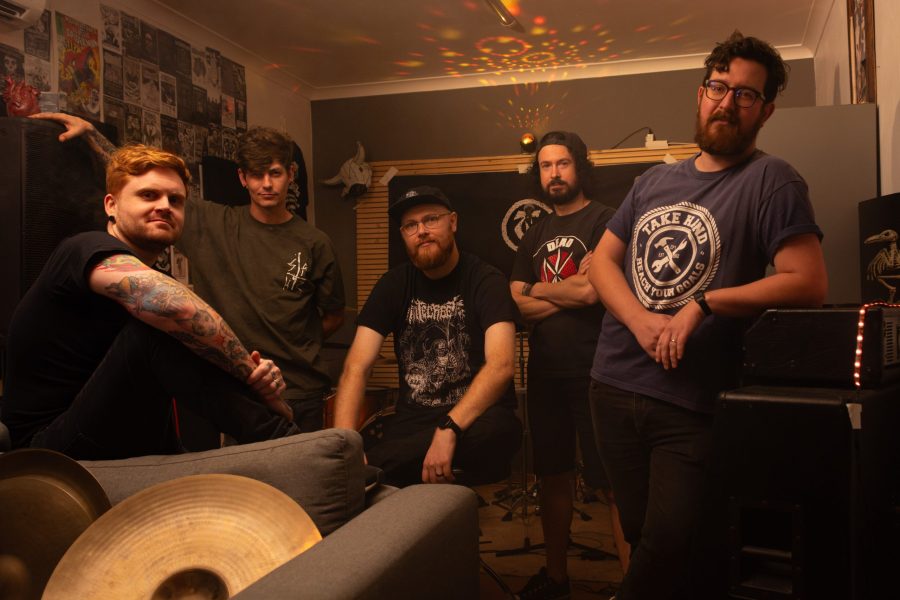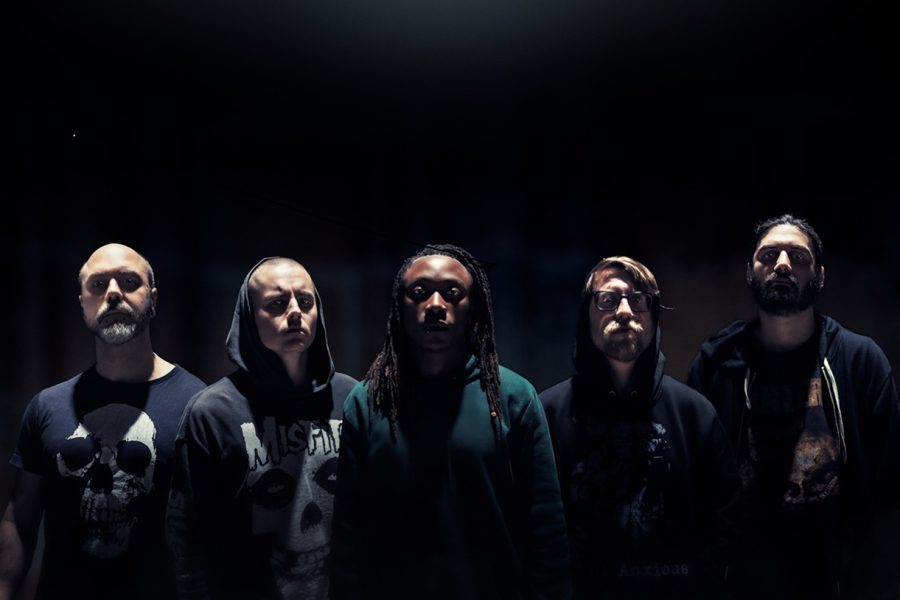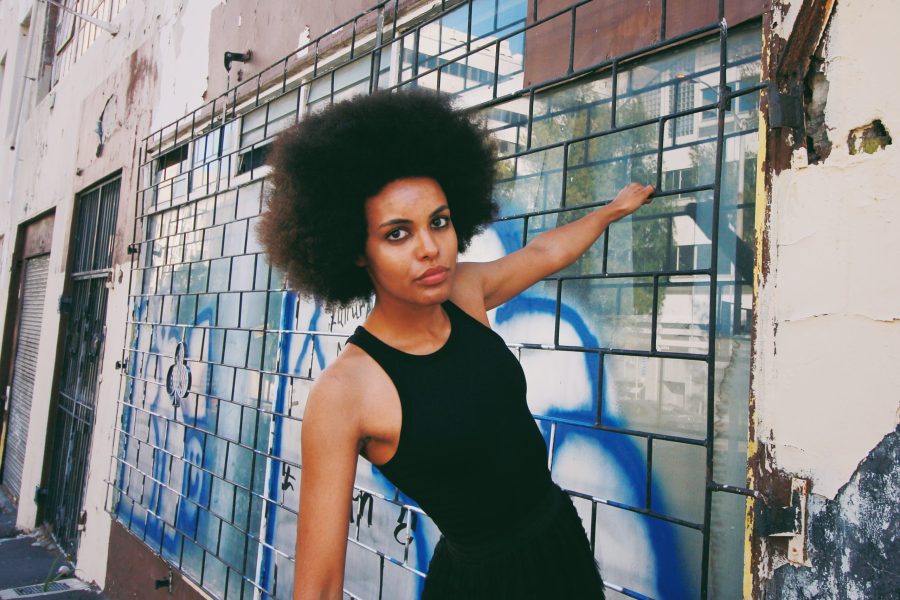

“I’m still that bitch, to put it in crass terms.” Zulian Joubert, vocalist of Johannesburg-based hardcore newcomers GRIFT, is discussing the character she steps into on stage. Frequently and without fear, she will jump into crowds of six-foot-two men to whip them into a frenzy.
With lyrics like “Another red text notice at the entrance door // Your mother’s hard-earned career on the kitchen floor”, she acknowledges that the lyrics she writes are extreme, so the performance has to match. It’s a tension that many performers navigate: how to embody a character that communicates a message without it coming off as a hollow act. For Joubert, it’s an extension of the self.
“It felt like you couldn’t throw your washing down without hitting someone trying to loop you into their NFT scam.”
“It’s definitely shoes I’m stepping into, but it’s still shoes that I have in the cupboard,” she explains. The persona is one that you don’t get to embody during the humdrum of daily life. “You can’t bring that energy into a Teams meeting, or when you’re doing the dishes, or you’re out in public,” she says, “but it’s what you feel when you read the news, or when your friends get laid off because of a broken system.”
That frustration with broken systems is a core part of GRIFT’s identity. While their name may be a punchy, monosyllabic phrase, it encapsulates the moment of 2023, when the band was born. The crypto market had just crashed, NFTs were dead in the water yet, as William Wright, bassist and backing vocalist for GRIFT, puts it, “It felt like you couldn’t throw your washing down without hitting someone trying to loop you into their NFT scam.”
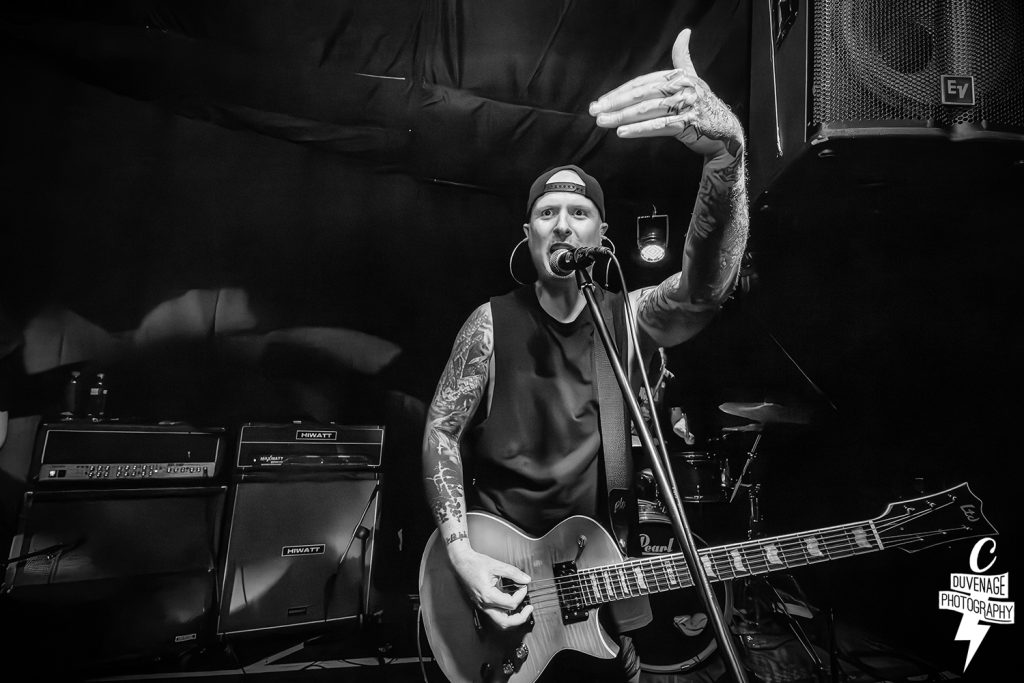
For Wright, the band is a necessary return to the roots of hardcore. “Hardcore, in general, is a genre that seems to be missing some of its punk roots,” he adds. “We want to bring back the social commentary and anti-capitalist messaging, because we’re currently living through an era where everything is a fucking scam.”
GRIFT delivers on that intent with music that doesn’t play around with the abstract. If it looks like a duck and quacks like a duck, it’s probably a duck. That’s the philosophy that underpins GRIFT’s lyrics, and it’s what makes them so striking.
We’re living in an age where nothing feels real. The lines between reality and unreality are becoming increasingly blurred as we speed-run hyper-online identities, micro-trends, and descent into totalitarianism. When bombs are falling in the Middle East and cities are on the verge of collapse due to predatory housing markets, the act of metaphor can feel burdensome.
“Joburg is like the single mother of South Africa:
she’s not pretty, but she keeps the lights on.”
But, as Joubert puts it, “There is no need for metaphor because you can’t make real life up.” Growing up with a single mom who was constantly being retrenched, coupled with the collective experience of late-stage capitalism, created a deep well of inspiration for Joubert and the band to tap into. They anchor themselves within the dysfunction of Johannesburg, yet their music speaks to a greater narrative: the polarising ways in which South Africa’s two major cities are positioned against one another.
As Laurice Taitz-Buntman described in a recent article for Daily Maverick, Joburg and Cape Town often feel like two separate planets, spinning on different axes. Capetonians are always complaining about Johannesburg; Joburgers are always complaining about Cape Town. As Cape Town barrels towards a hypercapitalist tourist hell, political leaders have begun to use Cape Town as foil to Johannesburg’s municipal dysfunction. However, strip back that dysfunction and you find a city of people hard at work to make something of themselves. “Joburg is like the single mother of South Africa,” describes Joubert, “She’s not pretty, but she keeps the lights on.” In contrast, “Cape Town is the cool single dad. We go there and we get to stay up late and have sweets for breakfast. It’s beautiful, but we don’t get to see the darkness because we don’t live there,” she adds.
As Taitz-Buntman describes, in Johannesburg, community isn’t an aesthetic – it’s a means of survival.
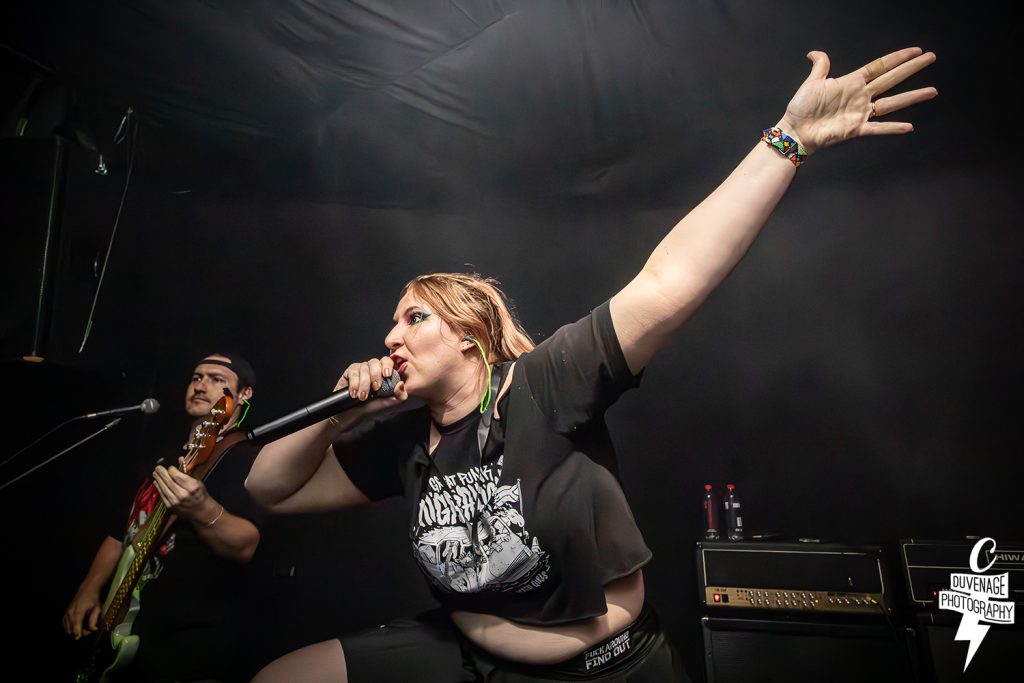
That survival instinct shows up in the Jozi hardcore/metal scene, where community functions as a means of release. The local circuit of shows allows for a collective ‘letting go’ that borders on the spiritual. It’s within these spaces that the concept of communitas, a term coined by anthropologist Victor Turner, takes hold. It refers to the intense feeling of solidarity and togetherness that emerges during shared experiences, like metal shows, where social hierarchies are temporarily forgotten. That feeling of camaraderie you experience in the mosh pit? That is communitas.
“We’re in a renaissance for underground music
in South Africa.”
The catharsis of a metal or hardcore show is the core of the experience. “It’s about the release of energy,” explains Wright, speaking about his desire to incite violence in the pit, “it’s not about wanting the crowd to beat each other up out of malice, but rather, it’s an expression of a state of being that we’re all in.”
However, despite this intent to create a feeling of collectivism, the band still encounters what they call the “Joburg semi-circle of disappointment.” It’s the manifestation of the shyness and discomfort we all experience when offered the chance to let go. We get so caught up in the fear of being perceived, worrying about whether we look like a ‘poser’ or if someone will mock our two-step, that we often choose to cross our arms and headbang instead.
“I do think sometimes we can be more violent,” muses Joubert. “It’s why I come off stage – because I get to incite that violence.” This is what positions GRIFT as the antithesis of the ‘poser’. They’re a band that wants the room to be in a maelstrom of moshing, so we can all finally let go.
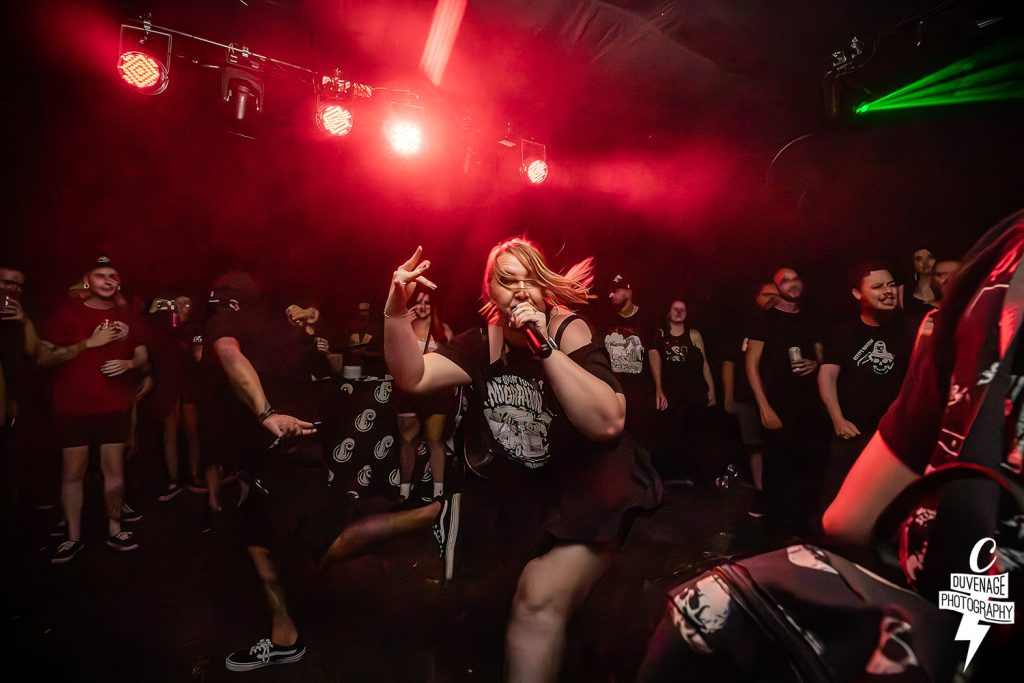
Having shared lineups with international bands like MatraK AttakK and Slug Gore, GRIFT sees these shows as opportunities to, in Joubert’s words, “prove that South Africa is hot shit.” That sense of drive is what defines the current state of the underground. “We’re in a renaissance for underground music in South Africa,” Wright says. “There are so many incredible bands as far as the eye can see across so many genres.”
In part, that renaissance is being built on the back of the friction that defines Johannesburg. For GRIFT, it’s a point of inspiration – one that allows for the moniker ‘Hate City’ to be used as a banner of unification.
“It’s a term that gets flipped to mean something positive,” Wright explains. “Joburg is a rough city; it’s cutthroat and competitive. But at the same time, it’s such a melting pot. Everyone comes here from all over South Africa, from villages and rural areas, to try and make something of themselves.”
In GRIFT’s view, ‘Hate City’ isn’t about mindless aggression, but a shared response to a broken system. “Because of all that negativity and fear, there is something really unifying. We’re all trying to get by, but we’re being trampled on by the system,” Joubert concludes. “So we say: let’s take that hate and turn it into something powerful. Let’s hate the things that are keeping us down – as a scene, as a community, and as a city.”
Catch GRIFT at Emo Night Presents: Feedback in JHB on 2 May. Get your tickets on Quicket.
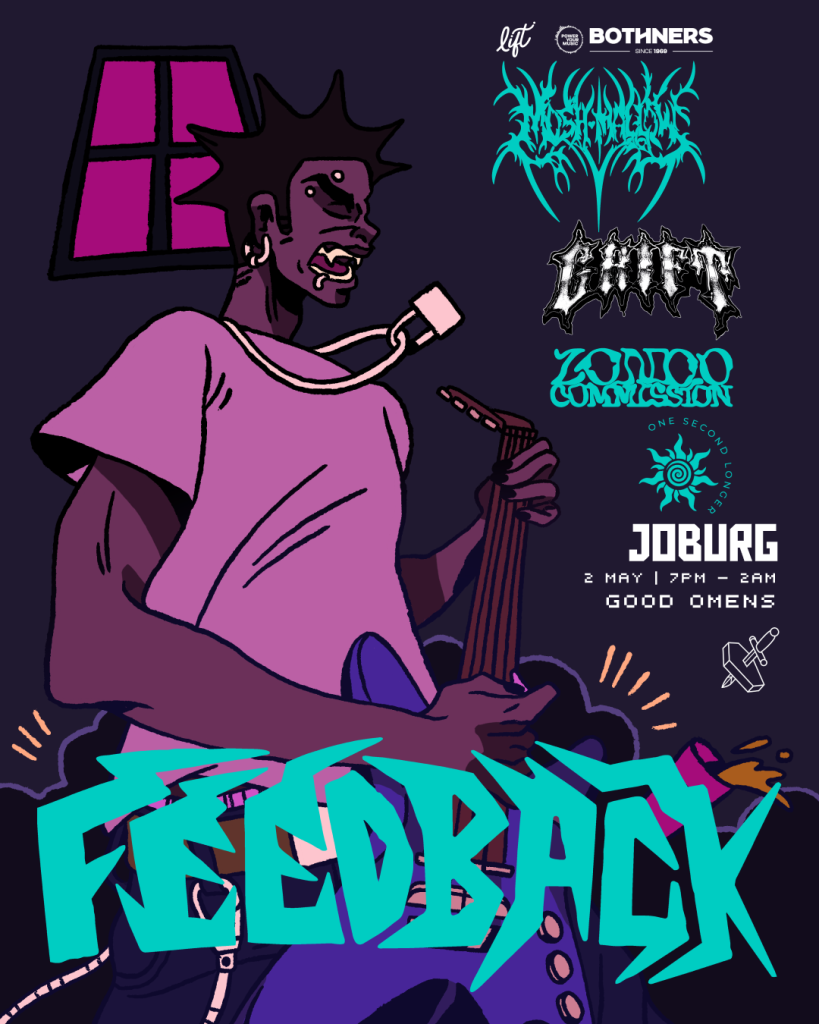
Photography by Christelle Duvenage. Artwork by Skip Ramen.